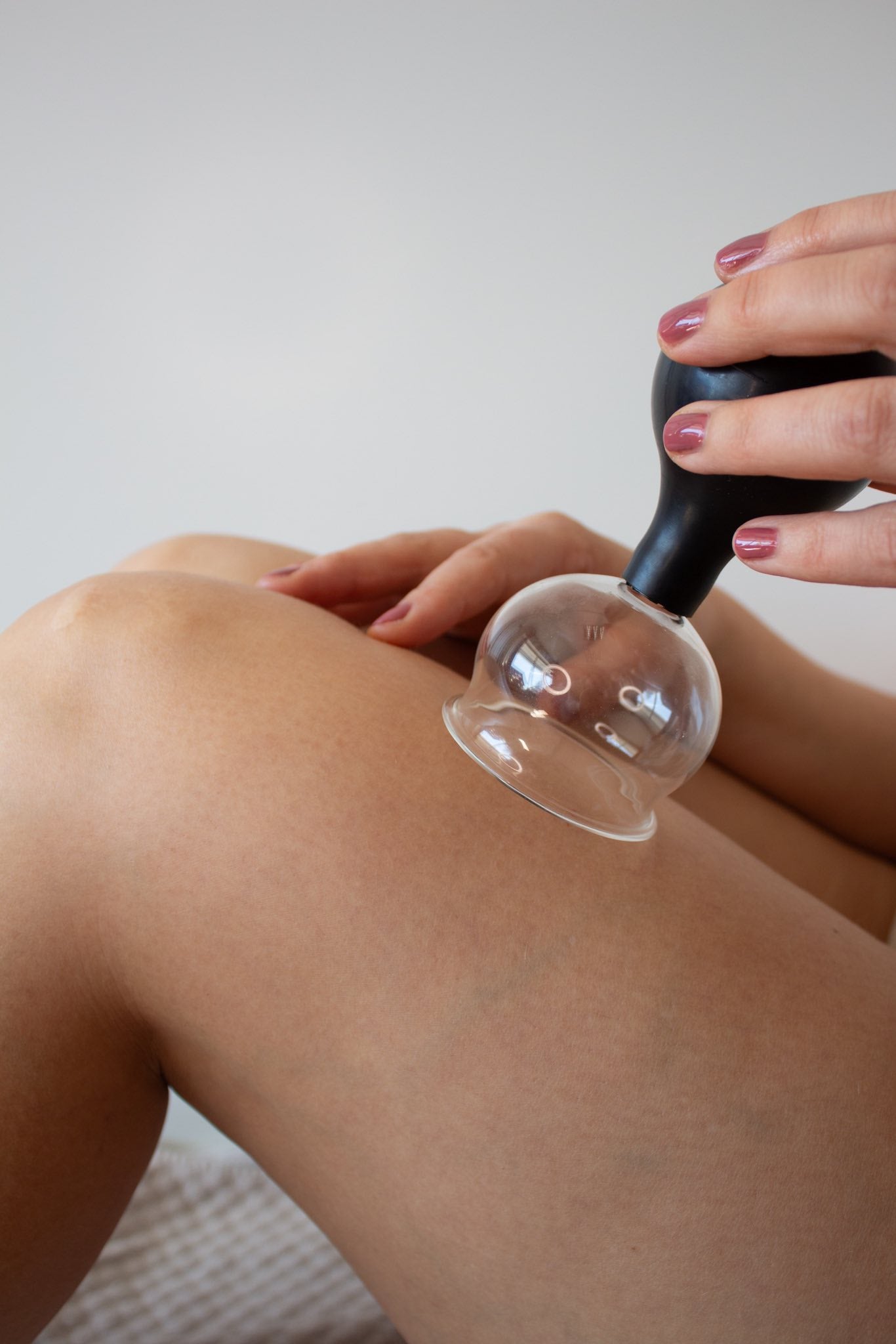
CUPme by Organic Konjac - Glass Cupping
CUPme by Organic Konjac - Glass Cupping
Organic Konjac's founder, Louise Nørgaard, writes:
I am really passionate about helping you with healthy and supple connective tissue, as it is the alpha/omega of feeling good in your body. Tight connective tissue in one place in the body can cause you pain in other places, as connective tissue is like a big elastic band.
Tension in connective tissue can have a variety of physiological and structural effects on the body. Connective tissue, which includes structures such as tendons, ligaments, fascia, and cartilage, is essential for holding our bodies together and supporting movement. When tension occurs in connective tissue, it can lead to a variety of symptoms and problems:
Reduced mobility
When connective tissue is tense, it can become stiff and less elastic, which can limit the range of motion in the joints. This can lead to stiffness in the muscles and joints and can make it difficult to perform daily activities.
Pain and discomfort
Tension in the connective tissue can cause pain and tenderness, which can feel like muscle soreness, but it can also cause deeper tissue pain. Tight areas can lead to localized pain and can also affect nerve function, resulting in tingling or numbness.
Inflammation
Prolonged tension can lead to inflammatory reactions in the tissue, which can worsen pain and limit movement. Inflammation in the connective tissue can also lead to the formation of adhesions or scar tissue, which can make it even more difficult for the tissue to move freely.
Muscle tension and compensation
When connective tissue is tight, muscles will try to compensate by changing movement patterns. This can create a vicious cycle where new areas of the body become strained and tense, leading to further pain and discomfort.
Poor posture
Tension in the connective tissue can affect the body's posture and lead to asymmetries in the musculoskeletal structure. For example, tight hamstrings or hips can lead to a hunched back or altered walking patterns.
Reduced blood flow
When connective tissue is tense, blood vessels can become compressed, which can impede blood flow. This can impair the delivery of oxygen and nutrients to the tissue, which can prolong the healing process and lead to fatigue and stiffness.
How to relieve tension in the connective tissue:
- Stretching exercises and mobilization: Gentle stretching exercises and mobilization techniques can help release tension in the connective tissue and improve flexibility.
- Massage and connective tissue massage: Deep tissue massage or specific connective tissue massage, such as cupping, can help loosen up tense areas and increase blood flow.
- Physical therapy and movement training: A physical therapist can help identify the specific areas of tension and work with you to improve posture and movement patterns.
- Relaxation techniques: Stress can contribute to tension in connective tissue, so techniques like meditation, yoga, or deep breathing can help reduce overall muscle tension.
Overall, tension in the connective tissue is a common cause of pain and reduced mobility, but with the right treatment methods, many of the negative effects can be alleviated.
Glass cupping is a traditional treatment method that originates from Chinese medicine and has been used for thousands of years. The method involves the use of glass cups that are placed on the skin, then create a vacuum that draws the skin and underlying tissue up into the cup. Cupping has become popular as an alternative treatment for both muscle and joint problems, as well as for the well-being and beautification of the body and face.
If you haven't yet tried what cupping can do for your body and face, I highly recommend giving it a try. With cupping on the face and body, you get:
-Reduced accumulated waste
-Skin improvement (wrinkles, cellulite, sagging skin)
-Faster healing of muscles and tissues
-Improved lymphatic circulation (swelling and fluid are reduced)
-Stress reduction (cupping activates the parasympathetic nervous system which promotes relaxation)
- Provides peace, well-being and a sense of lightness in the body
- Relieves muscle pain and tension
- Improved blood circulation
- The face gets a natural lift and swelling and bags are reduced.
- Strengthened connective tissue and increased collagen formation
The cups loosen all layers of the skin, connective tissue and muscles and cause waste products to come to the surface so that they can be cleansed via the lymphatic system.
How to do it:
Cups no. 1, 2 and 3 can be used on the face
Cups no. 3, 4 and 5 can be used on the body
Apply a good layer of oil or balm before use.
Work from the bottom up on the body and from the inside out on the face. Squeeze the round silicone balloon and place it on the skin. Release the pressure, let it slide up, squeeze it and lift it off. Repeat this 5-10 times in the same place and move on. On the face only 3 times in each place at first, to avoid red marks.
If you notice a spot on your body that is particularly tender when you slide the cup over it, you can leave the cup there for a few minutes to draw out the waste products and create more energy for the area. This may give a red (suction) mark, as a sign that the waste products are being released and there was "something to get to". So this is only a good sign and usually disappears within a few days.
Always move in the direction of the lymph. See the picture here in which directions you should massage your face. Be aware that you can easily get small blood draws on your face, so use it in front of the mirror the first few times until you know how many strokes your skin can withstand. The small blood draws will disappear after a few days. Also, do not leave the cups on your face for too long to avoid suction marks.
Cleaning:
Pull the silicone part off the glass and wash both parts with soap and water and let dry upright. Not suitable for the dishwasher.
I can recommend the course "Body Transformation with Cupping and Gua Sha" so you can learn how to use the glass cups correctly, as they are somewhat different to work with than silicone cups.
https://louisenorgaard.dk/pages/online-forlob
Share